English
 Spanish

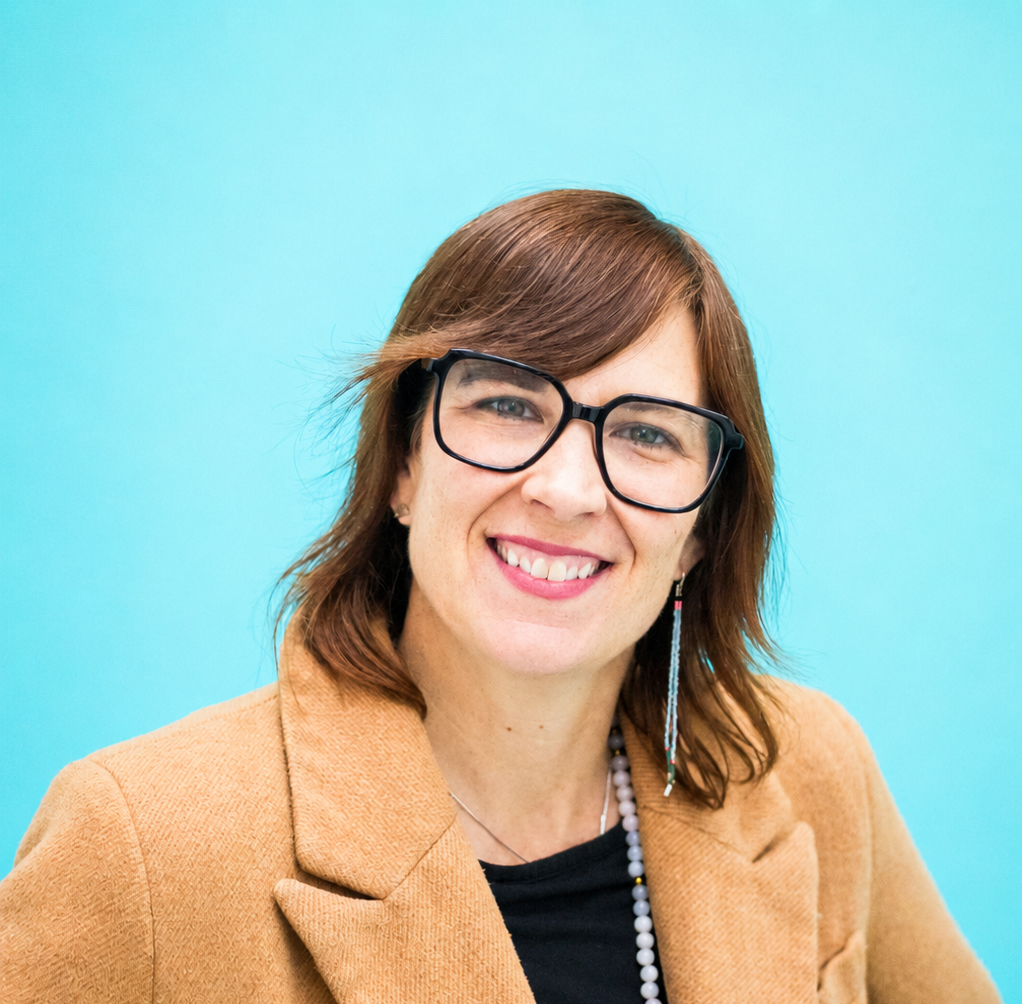
From Professor to Pioneer: Celeste Bolin’s Mission to Transform Education
By Alan Gottlieb
Celeste Bolin was four years into a visiting professorship at the College of Idaho, teaching upper-level genetics and introductory biology, when she started to notice a pattern. Her students were smart and capable. Many were also anxious, directionless, and unsure of who they were.
“There was a high, high level of stress, lots of anxiety,” Bolin said. “So many students were pretty disillusioned or unknowing about what they wanted or who they were.”
Bolin’s own path was about as far from directionless as you can get. She grew up in Idaho, studied chemistry at Whitman College, earned a PhD in neurotoxicology, and completed postdoctoral research in cancer biology at the Curie Institute in Paris and then at Boise State University.
But watching her college students flounder made her want to reach young people earlier, before the disillusionment set in. She started looking around.
Then she interviewed at One Stone, a small, independent high school in downtown Boise that lets students drive their own education. Two students, Chloe and Koko were active participants in the interview.
“The questions they asked and the way I was interacting with them, I was fundamentally curious and knew I had to jump in here,” Bolin said.
Teresa Poppen, One Stone’s co-founder, nudged her the rest of the way. “She said, ‘You don’t want to do this part time. You want to jump in with both feet,'” Bolin said. “And she was right.”
Bolin joined One Stone in the summer of 2017, one year into the lab school’s existence. She coached students, then became director of the lab school for five years, then was nominated by the school’s board of directors to become executive director, a role she has held for a little over two years.
At One Stone, the board is two-thirds students, and they chose her.
Now, with the help of a Bluum New Schools fellowship, Bolin is embarking on the most consequential project in the school’s history: Leading an effort to open a One Stone public charter school, a move that would make the school’s distinctive model accessible to any Idaho family for free.
Her official start date with the fellowship was April 1. She plans to submit a charter petition by September 1, with a hearing during the following legislative session and a decision expected by January 2027. If approved, the first students would enroll in fall 2027.
One Stone, now in its 10th year, occupies a singular spot in the landscape of American education. The school has no tests and no grades. Instead, it uses a growth transcript that measures students across 24 competencies, what the school calls its Bold Learning Objectives (the BLOB), organized into four quadrants: mindset, knowledge, creativity, and skills.
Students work on real-world projects with real-world partners from the day they walk in the door. The school’s coaches, many of whom come from professional backgrounds rather than traditional teaching, are trained in mentorship and the school’s growth framework. A student chairs the board of directors, and students participate in designing the educational experience itself.
For its first several years, One Stone operated as an independent, tuition-free institution funded primarily by the J.A. and Kathryn Albertson Family Foundation. In 2022, One Stone shifted to an individualized, income-based tuition model. Bolin said the charter pursuit is about returning to the school’s roots and removing the single biggest barrier to access.
“I truly do believe that tuition is one of the largest barriers to entry to One Stone right now,” Bolin said. “Even with the family individualized tuition.” The school currently enrolls about 85 students in grades 9 through 12, well below its capacity of 120 to 130. People hear the word “private” and never look further, she said.
Under the plan, One Stone would open a new charter school and close the existing lab school. Idaho law prohibits converting a private school to a charter, so the charter would be a new entity, though the heart of the program, the student experience, the growth framework, the coaching model, would carry over intact.
Bolin said the timing is right because of recent changes pushed by the Idaho Charter School Network to Idaho’s “innovative charter school” designation. The most significant: Charter schools under the designation are no longer required to employ state-certified teachers. They can certify educators within their own system.
“That was a huge, monumental change,” Bolin said, “because people that work with our students, many of them don’t come from a traditional teaching background. They’re professionals. And then they learn the One Stone model. We train them on mentorship and the growth framework.”
The charter designation also brings practical benefits: access to a special education program for a student body with a high percentage of neurodivergent learners, and support for transportation. Bolin said the school has considered the charter path at least four times before but always found roadblocks that would have required changing the model more than leaders were comfortable with.
“Those barriers aren’t there anymore,” she said.
One question is whether Idaho’s charter commission will approve a school this far outside the mainstream. Ironically, One Stone is better known nationally and internationally than it is in Boise. The school has taken students to conferences in Japan, and a delegation of Japanese educators has visited. Tom Vander Ark, a prominent national voice in education innovation, joined the One Stone board this year. Yet some families across town still ask: what’s One Stone?
Bolin said she is not worried about the commission’s reception. “I think the charter commission wants what’s best for Idaho students, and they know that families want choice,” she said.
She pointed to the school’s track record. One Stone’s transcript has been accepted by 185 colleges and universities and counting. A current student is starting at Tufts University in the fall. Another is in her second year at Wellesley. And because the school is now graduating its eighth class, it has data showing that its alumni do well after they leave.
“They thrive in the college atmosphere, if they choose to go to college,” Bolin said. “Our students thrive in both college and career environments.”
The school’s growth framework is also proving itself beyond Boise. Three publicly funded charter schools, two in Pennsylvania and one in California, now use the One Stone framework successfully. They are not One Stone schools by name, but they operate on its growth-over-grades model. That track record, Bolin said, should give the commission confidence that the approach works inside a public accountability structure.
Bolin described the ideal One Stone student as someone “ready to own their own learning, or curious about how they would own their own learning.” That does not mean the school attracts only students who struggled elsewhere. The population is split. Some students came from schools where they performed well by conventional measures but felt the experience was hollow.
Others are highly capable and creative students for whom the structure of a traditional school did not fit how they learn best. About 50 percent of current students qualify for free and reduced lunch.
There is a deeper conviction running beneath the practical logistics of petitions and lotteries and legislative sessions. “We radically underestimate what students are capable of,” Bolin said.
“If you remove the idea that they’re not equipped, or they could never be equipped at the level they needed to be without these very rigid steps, all of a sudden their ability to step into their potential is amplified. When you tell students you really believe in them, they are going to step into their potential with so much more confidence and humility.”
Bolin concluded with what might serve as One Stone’s unofficial motto: “We’re not designing for them. We’re designing with them.”
–
Alan Gottlieb is a Colorado-based writer, editor, journalist, communications consultant, and nonprofit entrepreneur who owns Write.Edit.Think, LLC. He founded EdNews Colorado, which later merged with Gotham Schools to form Chalkbeat. He does consulting work for Bluum, an Idaho-based non-profit education group.