English
 Spanish

Finding His Way Back to Students: Brian Bava’s New Mission
By Alan Gottlieb
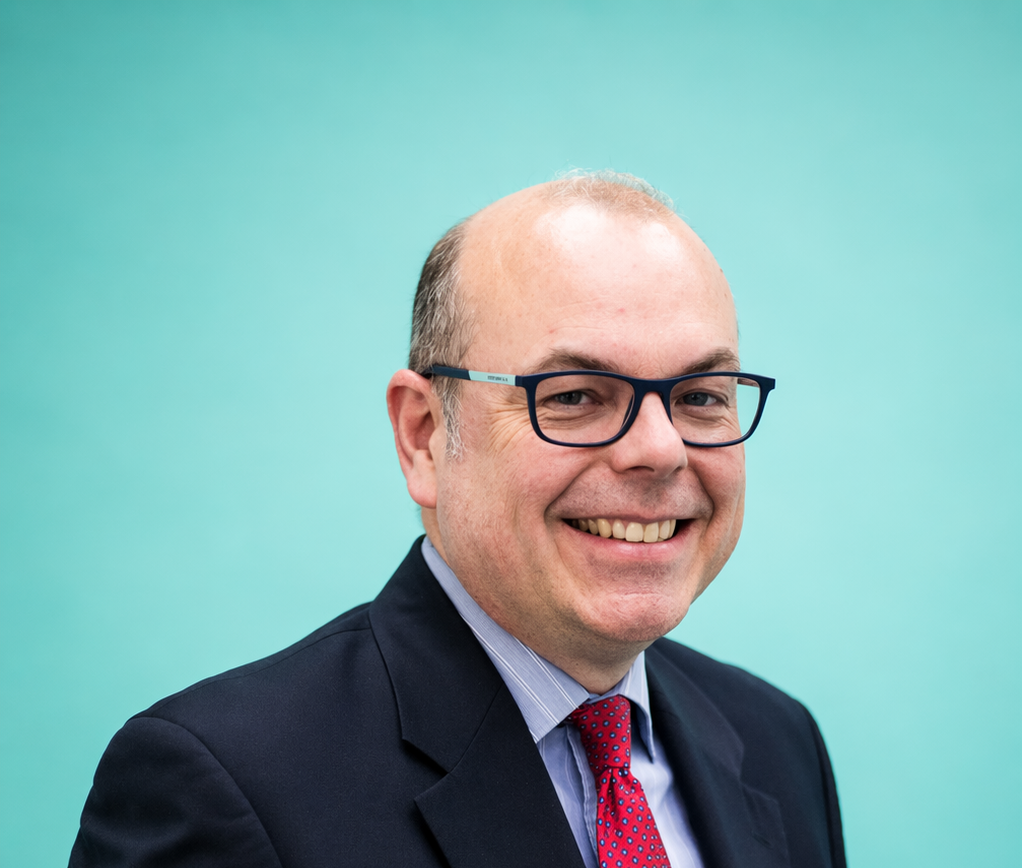
Brian Bava spent 20 years in higher education in Idaho. He worked in admissions, enrollment management and college leadership.
But when his time as vice president of enrollment at the College of Idaho came to an end in December 2025, he found himself thinking less about the administrative side of education and more about the part of the work that had always meant the most to him.
“I went back to thinking about the things in my career that had given me the most satisfaction, and working with students in particular was the big one,” Bava said. “When you’re in college administration, you really don’t have the opportunity to work as closely with students as you do in other roles.”
That reflection led Bava to Bluum, where he is now an Idaho New School Fellow working on one of the organization’s most ambitious projects: moving the high school program of Sage International School, an International Baccalaureate charter school in Boise, onto a university campus.
The idea, Bava said, is not so much about starting a new school as it is about creating a new kind of partnership between an existing charter school, a university and the IB program. If it works, it could become a model for similar arrangements across the state.
“The idea of having a high school on a college campus is really intriguing to me, especially in a place like Idaho, where there are so many challenges with students going on to college,” Bava said. “Having a school on campus where students can see firsthand what that natural next step is, is particularly intriguing.”
Bava’s background makes him a natural fit for the project. He grew up overseas, attending international schools in Japan and Korea before finishing high school at the United World College in New Mexico, where he completed the International Baccalaureate (IB) diploma program. His own children attended a IB school.
He went on to American University in Washington, D.C., originally planning to become a diplomat, before shifting into education. He worked in admissions at a nonprofit that ran model congresses for high school students, then moved to Kimball Union Academy, a boarding school in New Hampshire, where he wore the many hats typical of that world: admissions officer, coach, college counselor and dorm supervisor.
He eventually landed at the College of Idaho in Caldwell, where he spent 15 years across two stints, with a period at Concordia University’s law school in Boise in between.
That combination of IB experience and deep knowledge of Idaho’s higher education landscape is central to his selection for the fellowship. The primary challenge is logistical: identifying a university partner, securing a physical location for the school and negotiating the terms of a partnership that would give Sage International high school students access to university courses, facilities and campus life. 
Boise State University is an obvious candidate given its proximity to Sage. Conversations between Bluum and the university have occurred over the years, and picked up steam in the fall before Bava’s fellowship began. There is even a specific building on the Boise State campus, known as the campus school, that has been discussed as a potential home for the high school. Bava said the building sits in the heart of campus, near the quad.
“I believe there is capacity there,” Bava said. “But I haven’t heard it from them. I’m coming into the conversation midway.”
If Boise State does not work out, Bava said there are other options. The high school could be located near Boise State rather than on its campus, with students still taking university courses. Another great option is the College of Western Idaho, a two-year institution that is building a new campus less than five miles from Sage. A non-local university could even authorize courses delivered virtually, though Bava acknowledged that would be less than ideal.
The academic case for the partnership centers on STEM. Idaho legislators and employers, including companies like Micron, have expressed a need for more students entering the workforce with strong skills in science, technology, engineering and math. Bava said the goal is to show how the partnership would be mutually beneficial for both the university and the high school.
At the same time, he was quick to point out that the IB program is fundamentally a liberal arts curriculum, not a narrow STEM pipeline. Students would still pursue the full six-subject IB diploma. But being on a university campus could allow Sage students to double up on science courses, access higher-level math and take advantage of offerings in foreign language and the arts that the school cannot currently provide on its own.
“The folks who are going into those STEM fields have to have the skills that the IB provides,” Bava said. “You have to be able to communicate and think critically and collaborate. You don’t get that if you’re just studying STEM.”
The distinction between this arrangement and traditional dual credit is important, Bava said. In a dual credit setup, a high school teacher delivers a course and students receive university credit. What Bava envisions is closer to Washington state’s Running Start model, where students actually take courses on a college campus alongside college students.
That opens up not just STEM offerings but foreign languages, arts electives and other subjects that a charter school alone cannot easily staff on its own.
As for timing, Bava said there is an aggressive timeline and a more realistic one. If a university partner can be locked in within the next several weeks, a fall 2027 launch is possible. If not, fall 2028 is more likely.
Bava said he feels the weight of the project, but also its potential. If the Sage partnership succeeds, he can envision similar arrangements for other charter schools at Idaho State, the University of Idaho, Lewis-Clark State College and the College of Southern Idaho, each paired with the right charter school partner.
“If we can pull this off, it can become a model for other types of partnerships here in the state,” Bava said. “That’s another thing that’s really exciting about this, is the potential of being able to do this.”
–
Alan Gottlieb is a Colorado-based writer, editor, journalist, communications consultant, and nonprofit entrepreneur who owns Write.Edit.Think, LLC. He founded EdNews Colorado, which later merged with Gotham Schools to form Chalkbeat. He does consulting work for Bluum, an Idaho-based non-profit education group.