English
 Spanish

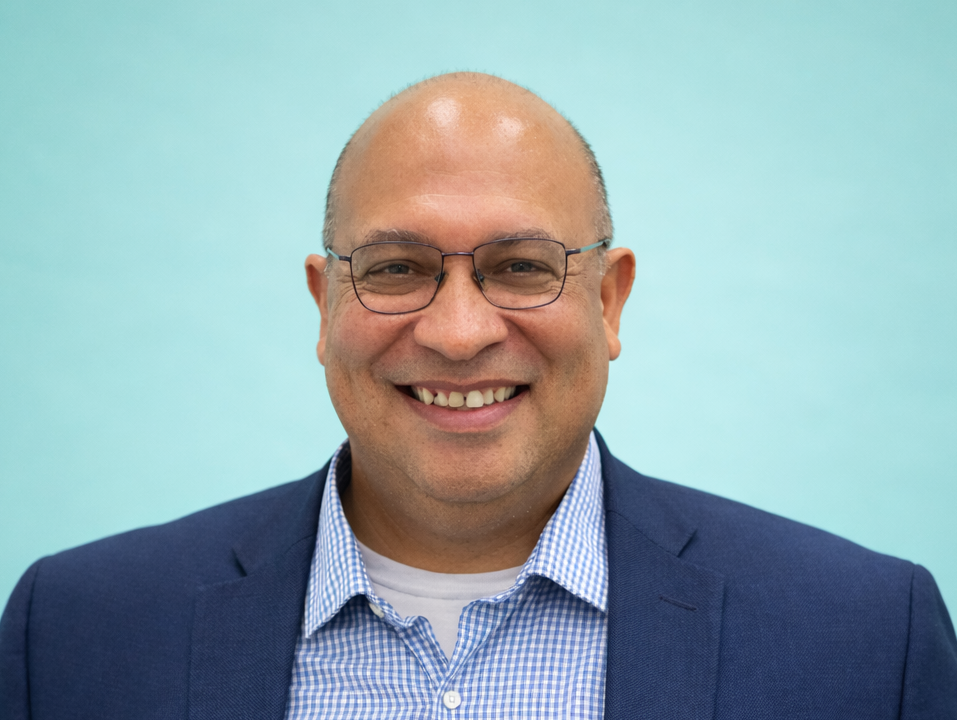
Phillip Schwenk Has Opened Schools Across America. Rural Idaho May Be His Greatest Challenge Yet.
By Alan Gottlieb
Phillip Schwenk has spent 30-years as a public educator, and most of that time was in places where the problems were loud and visible.
He taught high school history in the Los Angeles Unified School District for six years. He helped start three charter schools in Southern California, including one in Watts. He ran a career and technical education school in Cleveland. He founded a Hillsdale College-affiliated classical academy in Toledo and then spent four years fighting political battles to open another in Nashville.
Now he is in Idaho, working as a Bluum New School Fellow and working closely with the American Classical Schools of Idaho (ACS-I), trying to figure out something that none of those experiences quite prepared him for: how to deliver a classical education to children in communities too small and too remote for a traditional brick-and-mortar school.
Bluum runs the fellowship funded by the J.A. and Kathryn Albertson Family Fundation as a launchpad for new public charter schools in the state. Fellows receive a funded year or more to develop an academic model, build a board, line up facilities, engage families, and prepare a viable budget. Those who succeed can access substantial startup grants. The program has helped launch more than 45 new or expanded schools across Idaho.
Schwenk’s path to the fellowship started with a Thanksgiving invitation. He had known Steve Lambert, the founder of ACS-I, since around 2019, when both were starting Hillsdale Barney Charter School Initiative-affiliated schools in different states. Lambert had been asking Schwenk to visit Idaho for years.
Last Thanksgiving, the invitation finally stuck. Schwenk flew into Spokane and drove to Lambert’s home outside of Bonners Ferry, where the two began talking seriously about a problem Lambert had been turning over for a while: how to reach families living 45 minutes or more beyond the nearest brick-and-mortar classical school.
“We’ve spent a lot of our time as a nation thinking a lot about urban students, especially in the charter school movement, and not that much about the kid that’s from a rural space in the middle of nowhere,” Schwenk said.
The concept Schwenk is developing sits somewhere between a virtual school and a traditional one. He is not interested in putting kids in front of screens. Classical education, he said, is fundamentally a human enterprise, built around the idea that children learn best from a person worth emulating.
“You should have somebody in front of your child, one that cares deeply about them, but they’re also worthy of emulation, meaning they know things the child should know, and they’re trying to live a life that that child should try to live when it comes to moral and civic responsibility,” he said.
But he is also realistic about distance. The families he is hoping to serve live in communities too small to justify a full school building and too far from the existing American Classical Schools of Idaho campuses in places like Fruitland and Bonners Ferry.
The early model he is exploring would gather about 40 children, roughly kindergarten through third grade, with two teachers and two aides, in a setting that has yet to be fully defined. Some virtual tools might supplement the work, particularly for older students with specialized questions. But the core of it, especially for young children, would be face-to-face.
“The question is, how do we use those tools to benefit some of these families that might be a great distance from a brick and mortar?” Schwenk said. “But a lot of our original leanings will be towards having people in front of them.”
The model does not fit neatly into existing state policy, which generally recognizes schools as either brick-and-mortar or virtual. Schwenk said he expects that defining the school’s legal and funding structure will be a significant part of his fellowship work.
He wants to get it right, in part because he believes a well-defined model could be replicated in other states. “If we can figure out how to create these schools and how they’re supposed to be funded, and then do several of them, it’s really a conversation that can be had in other states,” he said.
Before arriving in Idaho, Schwenk’s introduction to classical education came in 2019, when he founded Northwest Ohio Classical Academy through the Barney Charter School Initiative, which is Hillsdale College’s K-12 program. He had spent years in the college-prep and career-tech worlds, and the shift in philosophy struck him.
College-prep schools, he said, are organized around getting students into top universities. Career and technical schools are organized around the economy. Classical schools are organized around something different.
“This huge desire to get people to be good,” Schwenk said. The goal is to produce students who are “not only intellectually solid, but they’re morally and civically responsible people as well. And it says that out loud, and it actually says that as the desired outcome.”
“We want good kids. Some of them may go out and be lawyers or teachers or plumbers or go to the military. That’s great, but let’s make sure that good human beings do those things.”
That conviction carried him to Tennessee, where then-Gov. Bill Lee initially wanted 100 Hillsdale-affiliated schools across the state. The number quickly dropped to three, then to one. Schwenk said Tennessee was the hardest state in which he has tried to open a charter school. He faced aggressive political opposition, including accusations that he was a white supremacist who would not teach about slavery or the civil rights movement. He found the charges baffling, both as a Black man, a history teacher and as someone who had spent years working in predominantly Black and Latino communities in Los Angeles and Cleveland.
Defending the work, he said, meant defending Hillsdale, and he said he did not find that difficult. He pointed to the college’s history: it was among the first American institutions to admit women and African Americans, and many of its early graduates fought for the Union and the abolitionist cause. “If you do quick research, you start to recognize that perhaps this group of people isn’t who you think that they are,” he said.
The one school that did open in Tennessee, American Classical Academy Rutherford, ended up serving a remarkably diverse student body on the south side of Nashville: 14 languages, a 30 percent English-language-learner population, a mix of affluent and low-income families from across Rutherford County. For Schwenk, it became a case study in whether the curriculum could work for everyone.
Now he is applying that experience to a different landscape. He describes himself as a school-choice advocate who sees parents as the primary educators. The charter school, in his view, exists because a family has chosen to raise their children alongside the school. The rural micro-school concept extends that logic to families who currently have no classical option within driving distance.
Schwenk said the fellowship year will be about getting the first site right, not about rapid expansion. Lambert and his team have been talking with interested families across the state for years, and Schwenk said he expects to identify a location within the next month or so.
The goal is to open with about 40 students in a K-3 configuration, with the possibility of growing to K-12 over time. If the community eventually reaches 200 or 300 students, the conversation might shift toward a full brick-and-mortar school. But that is not the starting point.
“This isn’t meant to be something where we blow it up right away and just be kind of mediocre,” Schwenk said. “It’s really about, how do you create something like this that can sustain and then be replicated?” ACS-I is in this for the long haul.
–
Alan Gottlieb is a Colorado-based writer, editor, journalist, communications consultant, and nonprofit entrepreneur who owns Write.Edit.Think, LLC. He founded EdNews Colorado, which later merged with Gotham Schools to form Chalkbeat. He does consulting work for Bluum, an Idaho-based non-profit education group.