English
 Spanish

Stepping Into Statewide Leadership: Merrill’s First Year at the Helm
By Alan Gottlieb
When Nanette Merrill took the helm of the Idaho Charter School Association last July, she knew she had a lot to learn.
She had spent years opening and running schools in the Gem Prep network, but leading a brand-new statewide association meant mastering a different set of skills: legislative advocacy, coalition building, and unifying a diverse charter sector under one organizational voice.
Six months in, Merrill said the experience has been both exhilarating and humbling.
“It’s been an exciting learning curve,” Merrill said. “I naively thought I knew charters coming in. But there’s another whole layer of the wonderful work that’s happening.”
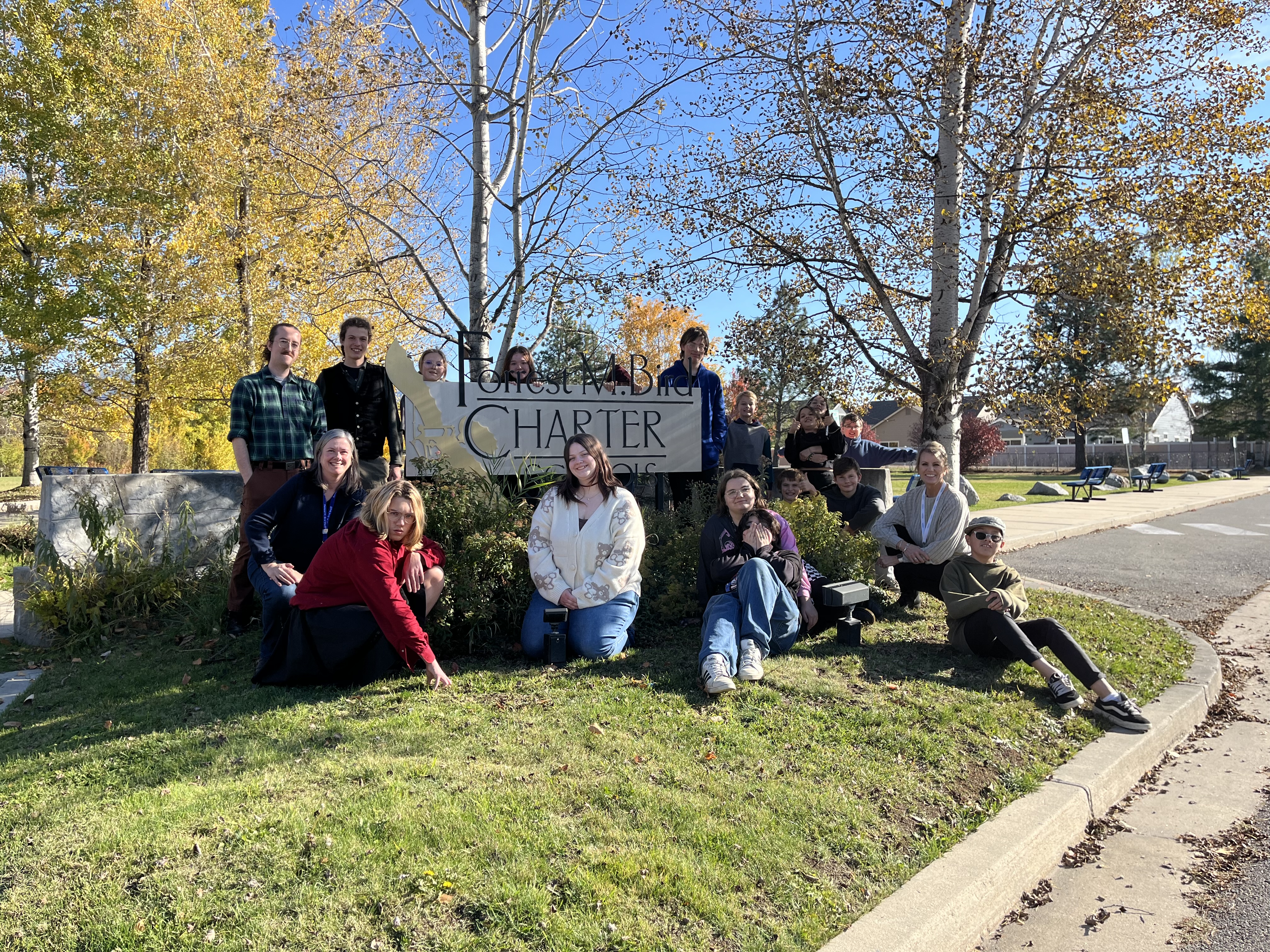
That deeper understanding has come from an ambitious schedule of school visits. In her first six months, Merrill visited 43 of Idaho’s 73 charter schools. The visits took her from tiny Hollister, with roughly 50 students in rural southern Idaho, to large campuses like Idaho Arts Charter School, which enrolls around 1,200.
“Every visit just reminds me of how awesome it is that we have these different pathways for kids to thrive,” Merrill said.
The visits have also served a strategic purpose. At each school, Merrill asked leaders what consumed their bandwidth and what the association could do to help. One issue rose to the top repeatedly: board governance.
“Regardless of the size of the school, if the board and the school leader are not unified and supportive of each other, it can go sideways pretty quickly,” Merrill said. “There are some schools that really have that super strong relationship, and they’re all following the mission and staying true to who they are.
“And then there are some where it’s become a bit of a challenge. Either a new board member has come on and didn’t receive adequate training, or maybe there was a board member that wanted to go a different direction, or there just hasn’t been strong communication.”
In response, ICSA plans to offer board governance training in the coming year.
Terry Ryan, CEO of Bluum and board chair of ICSA, said Merrill is progressing well. Drawing on his own experience in education policy, Ryan said the first year in a new leadership position is about learning, the second brings recognition and relationships, and by the third, a leader should have a fully independent voice.
“She’s halfway through the first year. I think she’s doing an excellent job,” Ryan said. “The first year is always hard.”
The association has also begun building a membership base. Merrill took a tiered approach, starting with school leaders already close to the work. As of early 2026, 18 charter schools had signed on as paying members, though she acknowledged the number will need to grow significantly.
Todd Ziebarth, senior vice president at the National Alliance for Public Charter Schools and an inaugural board member of ICSA, said having a membership-based association is a significant step for Idaho’s charter movement. For years, Bluum and its affiliated Idaho Charter School Network carried the advocacy load, but the lack of a standalone association meant the sector did not have an organization that could speak on behalf of all charter schools in the state.
“Idaho has been fortunate having Bluum, which has done a really good job on advocacy for the movement as a whole,” Ziebarth said.
But a membership organization, he said, also gives the sector stronger grassroots reach, because it can mobilize school leaders, teachers, and families across the state to engage with legislators. “It’s just another tool beyond policy persuasion,” he said. “Having the people piece, the grassroots piece throughout the state, can be really helpful.”
The political dimension of the job has been the steepest part of the learning curve for Merrill, a former Oregon Teacher of the Year who spent her career focused on instruction and school culture. Before taking the ICSA role, she had no experience navigating a state capitol. That changed quickly as the 2026 legislative session got underway.
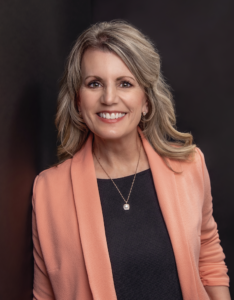 “The advocacy matters,” Merrill said. “It’s the farthest removed from schools, but it has a direct impact on schools’ ability to serve students. I never thought of it that way until I actually got into the work, how important it is.” The goal of ICSA, she said, is to be on the front lines so that school leaders can focus on teaching and learning in their buildings. “I was there. I know,” she said.
Ziebarth said Merrill’s background as a school leader is an asset in the role, even if the legislative arena is new territory. Good school leaders, he said, already practice a form of advocacy when they fight to get their schools approved, persuade families to enroll, and navigate reauthorization.
“A lot of school leaders have these skills. They’ve just used them in a different context,” he said. “The trick is to pivot them into a state legislative context.” He added that the existing team around Merrill, including Ryan and the lobbying team, gives her room to grow into the advocacy work without being thrown into the deep end.
The 2025 session proved one of the most active in recent memory for Idaho education policy. Lawmakers passed House Bill 93, creating the state’s first private school choice program, a refundable tax credit of up to $5,000 per student for non-public school families. They also debated legislation around virtual charter schools and passed a charter school facilities credit enhancement program.
For Merrill, the debates underscored the importance of positioning charter schools within a broader landscape of educational choice.
“Our families absolutely deserve options,” Merrill said. “No child is exactly the same, and we can’t expect them to go through the exact same system and come out healthy at the end. We need to find those unique pathways that support them.”
She has tried to frame charters as complementary to traditional public schools. “Education reform isn’t about closing down any traditional school districts,” she said. “It’s about finding unique pathways for students to love learning.”
One of the ongoing challenges is distinguishing ICSA from Bluum. The association grew out of the Idaho Charter School Network, which had operated largely as an extension of Bluum. ICSA is now an independent 501(c)(3), but separating the two in practice and perception will take time.
“It’s a little bit of a dance,” Ryan said. “But with good people and goodwill, it will get figured out.”
Merrill said she has encountered that confusion during school visits, with some leaders asking whether ICSA is simply Bluum by another name. “Bluum has done great things in the charter sector,” Merrill said. “But now there’s another entity here to support as well.”
Ziebarth said the transition will take time but is essential. Without the association, he said, the sector risked a divide between Bluum-affiliated schools and others.
“I think one of Nanette’s early priorities has been to just get out there and talk to schools, both Bluum schools and non-Bluum schools, and try to create an association that is going to represent the interests of all of the charter schools in the state,” he said.
“Long term, Idaho is going to be even stronger if it has Bluum doing the work that it’s doing and an association working in partnership with it, representing all the schools.”
Financial pressures have added urgency. Governor Brad Little ordered state agencies to cut spending last summer after tax revenue fell short, and the 2026 legislative session has opened with debate over additional cuts that could impact K-12 funding this year and next. Ryan noted that charter leaders are already reaching out to Merrill for guidance.
“There’s a lot swirling about,” he said. “Things move fast.”
Despite the pressures, Merrill said visiting schools has been the most rewarding part of her first six months, even as it has occasionally given her pangs for the work she left behind.
“I’d be lying if I said sometimes I walk away and I’m like, oh, I want to go back and be a leader,” she said.
But the broader view has reinforced her commitment. What once was a lens focused on the roughly 500 students she served as a principal now encompasses Idaho’s entire charter movement. “That audience is so much bigger and so important,” Merrill said.
Looking ahead, Merrill said she wants to be both a strong listener and a courageous advocate.
“I’m used to running a school, and I was very much an advocate and fearless in that sector,” she said. “Now I’m the head of an association, and I am not going to be afraid to stand up and fight the fight on behalf of charter schools and Idaho students.”
Ryan said that independent streak is exactly what the board wanted. “That’s why we hired her,” he said. “It’s not to be a mouthpiece for other people’s opinions. It’s to take the experience she’s got working in schools, working with families, working with kids, and representing the people in the field.”
–
Alan Gottlieb is a Colorado-based writer, editor, journalist, communications consultant, and nonprofit entrepreneur who owns Write.Edit.Think, LLC. He founded EdNews Colorado, which later merged with Gotham Schools to form Chalkbeat. He does consulting work for Bluum, an Idaho-based non-profit education group.