English
 Spanish

Building Special Education Leaders From Ground Up
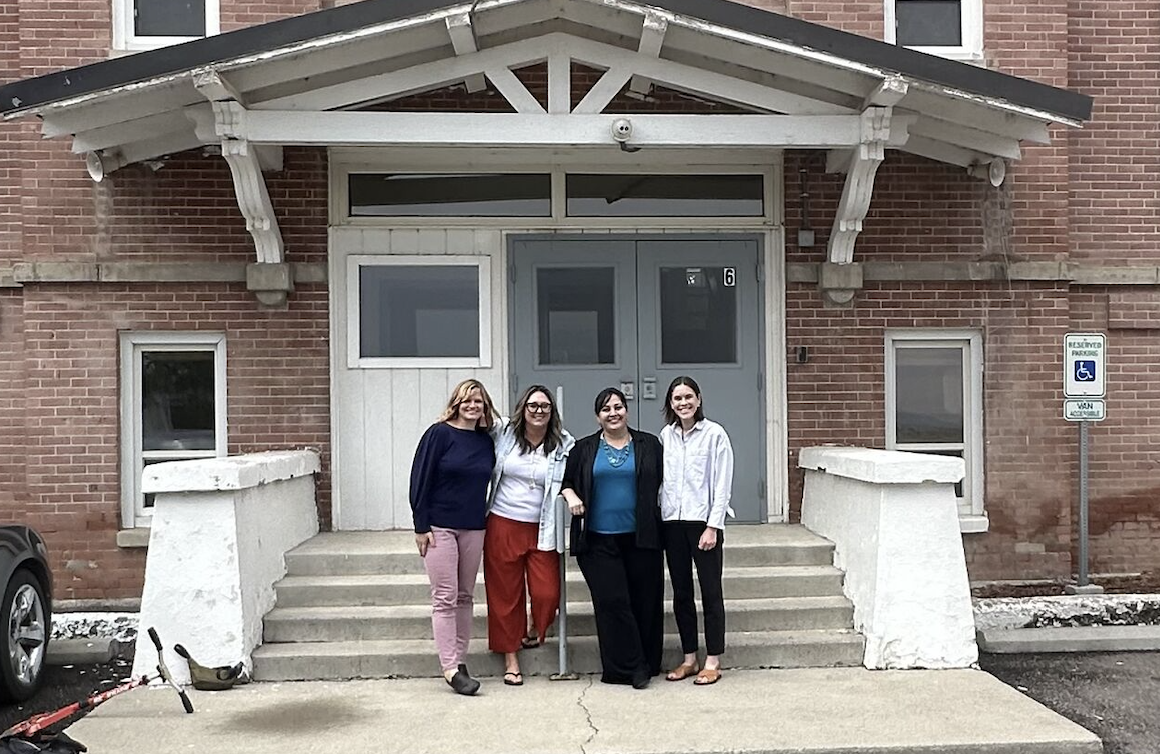
Kalley Malone, Jennifer Ribordy, Desiree Rivera, and Ashley Simard at Hollister Charter School
By Alan Gottlieb
When Jennifer Ribordy joined Bluum in 2020 as the organization’s lone special education staffer supporting about 20 Idaho charter schools, she quickly realized the field had a problem that went deeper than burnout.
“Seventy percent of special ed directors currently working have less than five years’ experience in that role,” she said, citing a West Ed study. “When you’re talking about a field that is so compliance heavy, so complicated, so legally precarious, having folks in that role that don’t stay longer than five years is really problematic.”
The reasons are layered: resource shortages, complex laws, tense relationships with families, and small schools that can’t afford to split compliance work from leadership. Most directors are promoted by “baptism by fire”—a strong teacher suddenly asked to lead.
A New Approach to Building Leaders
This fall, Bluum launched a fellowship to change that. Two fellows, Ashley Simard and Kalley Malone, are spending a year learning the intricate work of special education leadership before stepping into director roles. “Every child deserves the best education possible, no matter their learning differences,” argues Bluum’s CEO Terry Ryan.
The fellows split time between school placements—solving real problems with veteran mentors—and professional development in compliance, Medicaid billing, and systems design. The model mirrors principal-prep programs but applies it to a role that has historically lacked such training.
“When you’re a principal, you get to intern with other leaders before you take that job,” Ribordy said. “Special education directors don’t typically get that. Maybe they’d be more prepared if they started with something other than baptism by fire.”
Zero Applicants and a Creative Solution
The fellowship launched amid an acute shortage. At MOSAICS Public Charter School in Caldwell, principal Anthony Haskett posted a SPED director opening—and got zero applicants.
“There’s no real central place for education job postings in Idaho,” he said. “If you’re a single-site charter, unless you do major marketing, it’s hard to get the word out.”
Haskett reached out to Ribordy, who shared applicants not selected for the fellowship. That’s how he found Christina Sherwood, a 26-year special education veteran who’d never heard of MOSAICS before.
“Indirectly, the fellowship benefited us just by improving our applicant pool,” Haskett said.
Still, he asked for more: could a fellow work alongside his new director? Ribordy agreed. With four directors and eight SPED teachers cycling through in five years, MOSAICS needed stability.
Building Systems from Scratch
 Enter Kalley Malone, a PhD with 18 years of experience in Boise schools serving students with significant disabilities. Frustrated by large systems resistant to change, she was drawn to the flexibility of charter schools.
At MOSAICS, Malone spends half her week shoulder to shoulder with Sherwood building processes from scratch—Medicaid billing, referrals, IEP timelines, compliance paperwork—and half her week shadowing directors elsewhere.
“There wasn’t a lot of institutional SPED memory at MOSAICS,” she said. “But that’s changed this year.”
The partnership eased the load for Sherwood and accelerated progress. “It’s an example of iron sharpens iron,” Haskett said. “Kalley is learning what we’re doing to set up as a first-year director at the same time my first-year director is setting things up.”
Malone also co-led professional development for teachers, clarifying how special education fits into general classrooms. “Gen ed teachers didn’t always understand what special ed is or how it functions within the school,” Haskett said.
From Craft Beer to the Classroom
Across town, fellow Ashley Simard is filling a similar role at Idaho Arts Charter School. The school lacked a SPED director, so Simard works closely with Bluum’s special education program specialist, Desiree Rivera, in an acting-director capacity. She spends part of her week there and one day shadowing at Sage International School.
 Simard’s path to education wasn’t linear. After graduating from the University of Virginia, she managed sales for a craft brewery before pivoting to teaching through Teach For America’s Idaho corps in 2020.
“I was surprised they let first-time teachers run a classroom like that, but it was such an amazing learning experience,” she said. “It solidified where I wanted to be.”
After earning her master’s in educational leadership, she found the Bluum fellowship—a perfect match for her interest in systemic change.
At Idaho Arts, Simard reviews IEPs, supports the multidisciplinary team, and helps rebuild compliance systems that had grown inconsistent after leadership turnover. Assistant principal Stephanie Waterman said the help was crucial after the state flagged the school for compliance issues.
“We were in a lull between directors,” Waterman said. “Ashley and Desiree have brought clarity and consistency.”
Learning by Doing
Both fellows expected to observe and learn. Instead, they found themselves immersed in real work with real consequences—and loving it.
“I’m really fine-tuning my skills as a leader, being able to work with so many different teams,” Simard said.
Malone added that she’s seen how vital strong systems are to teachers’ success. In districts, she’d pass paperwork off to unseen staff; in charters, she’s learned how much of that responsibility rests on the director.
Bluum originally planned to rotate fellows between schools, but when Ribordy checked in, principals asked her to keep them. “When you’re there longer, you see all the tentacles,” she said. “The deeper you stay, the more complex the problems you can actually solve.”
Rivera, who once led special education at Elevate Academy, said watching fellows grow reminds her of her own trial-by-fire experience. “I had to learn to fly as the plane was being built,” she said. “Now I get to help people grow in a way that’s actually manageable.”
Staying Grounded in Schools
For Ribordy, the program also keeps Bluum staff connected to classroom realities. Having left teaching in 2014, she values fellows’ fresh perspective.
Beyond school placements, Simard and Malone spend Thursdays and Fridays in professional development, site visits, and impact projects—like creating an awards ceremony to honor SPED directors and designing mini-trainings to bridge gaps between general and special education teachers.
The visits have opened their eyes to charter innovation. “It’s refreshing to see how differently schools operate and how it all works together,” Malone said.
Simard admitted the experience upended her assumptions. “There’s a misunderstanding that charters don’t serve special ed populations the way they should,” she said. “What I’m seeing is that’s not the case at all.”
A Model Worth Replicating
Bluum funded the fellowship through its general operating budget, supported by the J.A. and Kathryn Albertsons Family Foundation, offering fellows salaries and benefits that matched their experience. Both exceeded expectations—Simard ranked in Teach For America’s top 10 percent, and Malone is a former president of Idaho’s Council for Exceptional Children.
Ribordy hopes to extend the program beyond its inaugural year. “It’s probably been one of the most rewarding things professionally that I’ve ever done,” she said. “Everything that’s transpired in the schools because of their presence has been incredibly rewarding.”
The feedback has been glowing. Principals sleep better knowing trained fellows are in their buildings. The fellows gain leadership experience without being overwhelmed. And Idaho charters are slowly building the special education infrastructure they’ve long lacked.
Haskett summed it up simply: “My life is better.”
The fellowship has done more than train two leaders—it’s built a pipeline where none existed, connecting schools with candidates they couldn’t find on their own. “This is really innovative,” Haskett said. “Special education is a hard role to fill in any school. Equipping people before they get into the fire—I think that’s brilliant.”
Ribordy hopes to expand the fellowship as long as strong school partners exist. The need, she said, is undeniable.
For now, Simard and Malone spend their days tackling the complex, compliance-heavy work of special education leadership—building systems, mentoring teachers, and shaping a field in need of stability. When their fellowship ends, both plan to stay in Idaho’s charter network.
“We want people who are going to be part of this charter world we’ve created and help make it better,” Ribordy said. “They’re in the network forever now.”
–
Alan Gottlieb is a Colorado-based writer, editor, journalist, communications consultant, and nonprofit entrepreneur who owns Write.Edit.Think, LLC. He founded EdNews Colorado, which later merged with Gotham Schools to form Chalkbeat. He does consulting work for Bluum, an Idaho-based non-profit education group.